
MANUFACTURED CAPITAL
Engineered for Agility; Built for Scale
Manufactured Capital is where Dabur's purpose meets execution. It is through our manufacturing network that consumer insights, scientific innovation and nature-based ingredients are transformed into trusted products that reach millions of households, every day. Our plants are not just production facilities, they are enablers of agility, quality and closeness to the consumer. By manufacturing closer to the markets we serve, we stay deeply connected to evolving preferences, respond faster to changing demand, and ensure that our brands remain relevant in a dynamic consumer landscape.
This philosophy was reinforced during the year, which saw Dabur break ground for its new greenfield site in Tindivanam, Tamil Nadu. The formal groundbreaking ceremony was conducted by the Hon’ble CM of Tamil Nadu in February 2026, post which construction started in full swing. The factory is expected to begin operations by end of FY 2026-27 with Red Toothpaste & Dabur Gulabari, with more lines and product categories to be added in the future.
Strategically located to serve the fast-growing southern Indian markets, the Tindivanam plant is envisioned as a modern, multi-category facility designed to combine scale with sustainability, efficiency with flexibility. Beyond strengthening supply capabilities, it represents Dabur’s intent to deepen local sourcing, create employment and embed itself further into the communities it serves.
Today, Dabur’s manufacturing ecosystem spans 21 world-class facilities, including 13 manufacturing locations across India and production units in 8 overseas markets, enabling us to serve consumers in over 120 countries with consistency and reliability. This global footprint — anchored in a culture of continuous improvement and operational excellence - gives Dabur the resilience to navigate volatility, the flexibility to innovate at speed, and the strength to deliver long-term value for consumers, partners and investors alike.
Dabur has continued to invest in advanced manufacturing technologies and sustainable infrastructure to enhance operational resilience and environmental performance. Key interventions include the incorporation of energy-efficient building designs, adoption of low-energy equipment, and optimization of utilities to reduce overall energy intensity. Additionally, all major facilities are equipped with advanced effluent treatment systems (ETPs), designed in compliance with regulatory discharge norms, ensuring responsible water management and minimization of environmental impact.
These initiatives are further supported by a strong focus on sustainability integration within manufacturing processes, including reduction of resource consumption, improved waste management practices, and alignment with circular economy principles. Collectively, the integration of continuous improvement practices with sustainable technology adoption strengthens Dabur’s manufacturing ecosystem, making it adaptive, resource-efficient, and aligned with long-term ESG commitments and regulatory expectations.
PERFORMANCE HIGHLIGHTS
As a responsible corporate citizen, Dabur has consistently prioritised energy conservation in its operations, aiming to minimise reliance on non-renewable fossil fuels, enhance energy productivity, and reduce operational costs. Effective energy management is a cornerstone of Dabur’s environmental sustainability strategy. Some of the key initiatives taken this year are:
- Adoption of biomass as a sustainable raw material for energy generation systems such as boilers, coupled with the upgradation and replacement of requisite pollution control devices.
- Use of high-efficiency motors (IE3/IE4) across utilities and process equipment to enhance operational efficiency.
- Integration of Variable Frequency Drives (VFDs) in continuous operation drives like pumps, chillers, etc along with installation of energy-efficient LED lights to optimize energy usage.
- Implementation of energy conservation measures for compressed air and steam systems through optimized consumption, reduction of losses, and replacement of pumps and piping with improved designs. Infrastructure upgrades have also been undertaken to ensure reliable state power supply and minimise transmission losses.
- Implementation of robust Condensate Recovery System and adoption of monitoring and parameters-based operations in Boilers and Substations, leverage IoT and Al technologies delivering measurable energy savings.
| No. | Steps Taken on Energy Efficiency | Capital Investment (in Lakhs) |
| 1. | Digitization of Utilities, Use of Energy monitoring systems/PLC based substations, Online monitoring and controlling of parameters be nefitting in optimizing energy usage | 407 |
| 2. | Use of High energy efficient motors (IE3/IE4) & using VFDs ensuri ng optimized energy usage | 312 |
| 3. | Use of Biomass-based Boiler with upgradation/ replacement of requisite pollution control devices & APH/refractories benefitting in ener gy efficiencies | 228 |
| 4. | Replacement of process and utility pumps, chillers, cooling towers etc with higher efficiency respective equipment | 169 |
| 5. | Condensate recovery systems with transfer pumps benefitting in reduced water consumptions and energy savings | 29 |
| Total Investment | 1,145 |
Accelerating the Shift to Green Energy
Dabur remains committed to minimizing its impact on environment by prioritizing the use of green energy in its operations. This focus enables us to limit the impact of our scope 1 and scope 2 emissions. Notably, in FY 2025- 26, we maximized use of renewable fuel and electricity, achieving 800bps increase in use of renewable energy in our inhouse Scope 1 & 2 emissions. Consequently, ~65% of our total energy consumption was sourced from renewable energy sources, in line with our stated public commitment.
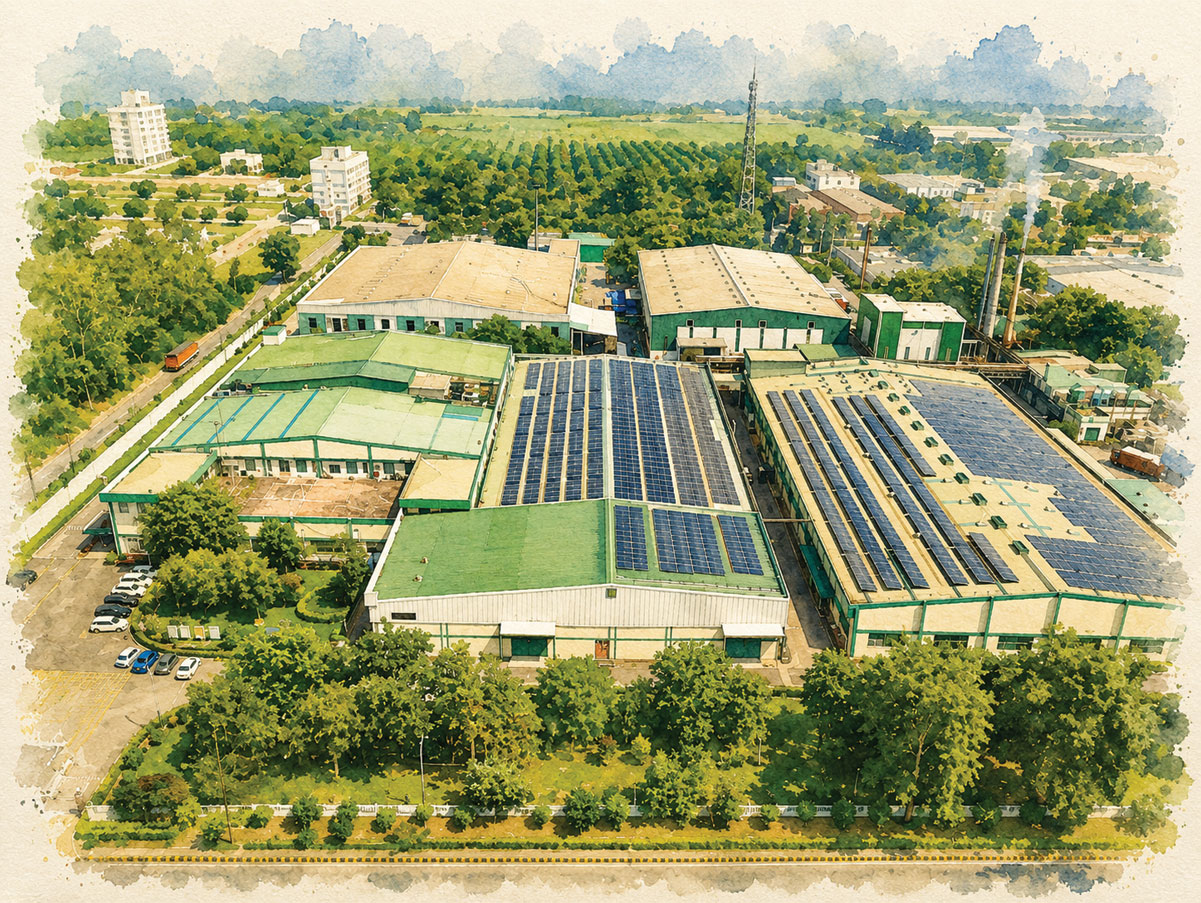
Dabur India Limited is proud to announce that our corporate office in Ghaziabad, Uttar Pradesh, is fully solar electricity powered. In addition, the Sahibabad Manufacturing Facility in Uttar Pradesh has become the first factory in the Dabur Network to operate using 100% Solar Electricity.
Some of the key initiatives taken this year are:
| no. | Steps Taken on Energy Sustainability | Capital Investment (in Lakhs) |
| 1. | New Captive Roof Top Solar power plant - 930KW at Silvassa | Opex Model |
| 2. | Bio Briquette boilers - 0.75 TPH at Alwar, 2TPH at Silvassa | 349 |
Total capital investment of 14.9 crore was made on energy efficiency and sustainability measures undertaken during the year.
Dabur remains steadfast in leveraging cutting edge technologies to enhance operational excellence and elevate consumer experience. We actively collaborate with domain experts, equipment manufacturers — both in India and globally - along with industry bodies, digital innovators, and startups to drive continuous innovation, accelerate adoption, and futureproof our business.
The Company's technology absorption initiatives over the past three years have delivered tangible benefits, including product improvement, cost optimization, innovation development, and import substitution, as outlined below:
Manufacturing processing systems:
- Installed two state-of-the-art ultra-high temperature sterilizer set-ups, which enhance our capability to produce more beverage innovations.
- Commissioned in-house new high-speed Carbonated Soft Drink manufacturing processing line in Jammu.
Primary Product Filling Systems:
- A first of its kind, high-speed Aseptic PET bottle filling line installed at our Indore plant, which can pack from 150 ml to 2L packs, with end-to-end automation.
- Ultra high-speed PET bottle filling line installed in Indore plant, which can pack from 150 ml to 2L packs, with end-to-end automation.
- World's fastest beverage carton filling line, which can pack 40,000 packs per hour, installed in the Dabur Network.
End of Packing Line Automation:
- Use of robotic palletizers to pack 4 SKUs at a time, thus efficiently managing multiple SKUs in different lines to improve manpower productivity. At Indore unit, we have started to use case packers and palletizers in highspeed juice filling lines.
Warehousing and Inventory Management Systems:
- The material storage blocks in Tezpur factory have been equipped with software SAP WMS. Dabur can now run and manage a high volume of goods and run agile operations with digitalized and automated warehouse processes, wherein the SKUs are tagged with a bar code which is mapped in SAP, thus ensuring FIFO retrieval with no human intervention.
Digital Technologies:
- As part of our Digital Transformation journey, Dabur has implemented bestin- class technology solutions centred on new-age technologies like Industrial IoT 4.0 for Improved Safety Monitoring, ESG Performance Tracking, Asset Management, Freight Optimization Solutions and Robotic Process Automation for certain aspects of customer service. Dabur has also embarked on organization-wide Digital Initiatives like Journey to Cloud and Data Lake implementation to strengthen the analytical capabilities.
An investment of 24 crores was incurred on imported technology or made in India with imported components during FY 2025-26.
At Dabur, our supply chain does more than move products, it connects our promise to millions of consumers. Designed for agility and powered by continuous improvement, it enables us to respond swiftly to market needs while maintaining the highest standards of quality and efficiency. As we grow, we are strengthening this backbone through smarter processes, digital integration, and a strong focus on sustainability.
Driving Sustainable Logistics Through Operational Excellence and Network Optimization
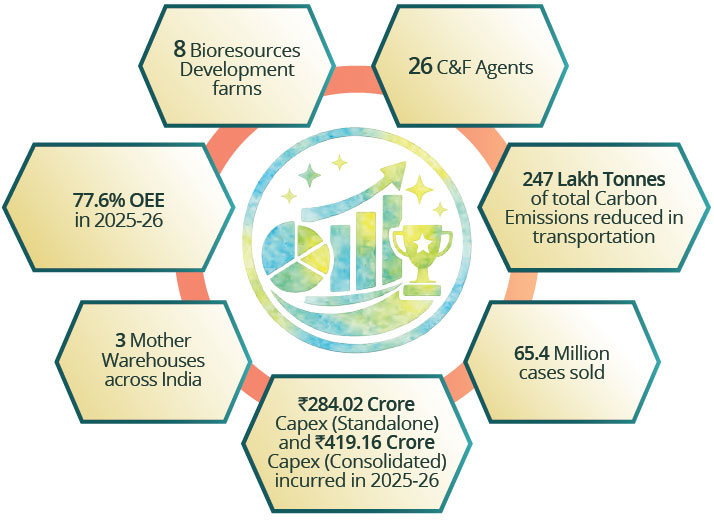
During FY 2025-26, our logistics network continued to strengthen operational efficiency while advancing sustainability-led initiatives across the supply chain. The organization delivered over 65.4 million cases of sales through an integrated logistics ecosystem comprising 3 Mother Warehouses, 26 Carrying & Forwarding Agents (C&FAs), 81+ third-party manufacturing units, and 12 proprietary manufacturing facilities.
Through focused interventions in route optimization, fleet rationalization, higher vehicle load-ability, multimodal transportation adoption, and deployment of alternate fuel vehicles, we achieved significant improvement in logistics productivity while reducing overall environmental impact.
Optimized Route Planning and Improved Fleet Utilization
At Dabur, smarter logistics is driving stronger outcomes. By re-engineering routes and refining transport planning, we have improved vehicle utilization and maximized load efficiency across our network. Deployment of optimized fleet configurations and better dispatch synchronization have helped reduce empty runs while increasing payload per trip. Even as business volumes grew, we managed logistics operations with 55,000+ vehicle movements in FY 2025-26, an 8% reduction from the previous year. This demonstrates stronger network productivity, lower fuel consumption per unit moved, and enhanced transport efficiency across the logistics chain.
Sustainability-Led Logistics Transformation
At Dabur, building a sustainable future goes hand in hand with driving operational excellence. We are steadily reducing our environmental impact through smarter fleet planning and greater adoption of cleaner transportation solutions. As an early adopter of electric vehicles in FMCG logistics, we have deployed over 40 EVs across our network for mid-mile and last-mile product distribution, in line with our carbon neutrality goals. At the same time, we are piloting retrofitted vehicles, taking purposeful steps toward a greener and more future-ready supply chain.
Further, we are in direct discussions with vehicle manufacturers and a few start-ups to deploy higher capacity EVs through our logistics partners for direct transportation of goods from factories We have also significantly increased our use of rail transport, achieving a three-fold increase in rail utilisation as part of our strategic shift towards more sustainable logistics.
Focused initiatives around higher loadability, multimodal transportation, route optimization, reduced trip intensity, and cleaner transportation solutions collectively contributed toward lowering the carbon footprint across logistics operations.
These initiatives resulted in an estimated reduction of approximately 247 lakh tons of carbon emissions during FY 2025–26, reinforcing the organization’s commitment toward environmentally responsible logistics operations and long-term sustainable growth.
Dabur remains steadfast in its pursuit of operational excellence, driven by continuous capability building, capacity enhancement, and the adoption of global best practices across its manufacturing network. Central to this journey is the disciplined implementation of the Kaizen philosophy, which fosters a culture of incremental improvement, innovation, and agility at every level of the organization.
To deepen employee engagement and institutionalise structured problem-solving, Dabur regularly organizes Kaizen Melas across its manufacturing units. These forums serve as powerful platforms for employees to contribute ideas, exchange best practices, and collaboratively address operational challenges. Beyond driving improvements, this participative approach nurtures a strong sense of ownership, embeds a culture of continuous learning, and reinforces operational discipline across the workforce.
During FY 2025–26, this commitment to continuous improvement was reflected in the submission of 2,858 Kaizen projects across locations, including occupational health & safety, process productivity, product quality, and workforce engagement. Notably, each of these initiatives was successfully implemented, underscoring the robustness of Dabur’s evaluation processes and execution capabilities at the plant level. These initiatives were closely monitored, evaluated, and integrated into plant-level performance management systems, resulting in quantifiable cost optimization of over 2.98 crore.
Collectively, these interventions have contributed to meaningful cost savings, improved resource utilization, reduced waste, and enhanced overall equipment efficiency. This structured and inclusive approach to continuous improvement not only strengthens Dabur’s manufacturing competitiveness but also aligns seamlessly with its broader ESG priorities, driving sustainability, operational resilience, and long-term value creation.
Manufactured Capital: Driving Agile, Sustainable and Resilient Operations
Dabur's manufactured capital forms the foundation of its ability to consistently deliver high-quality, natural, and science-backed products to a diverse and growing global consumer base. As the organization continues to scale in response to evolving market dynamics and consumer preferences, it remains focused on transforming its manufacturing ecosystem into a more agile, efficient, technologically advanced, and sustainable network.
Capacity Expansion to Enable Scalable Growth
To support its long-term growth strategy across domestic and international markets, Dabur is making targeted investments in strategically located, scalable, and modular manufacturing facilities. These units are being designed with flexibility and adaptability at their core, enabling rapid response to changing demand patterns and new product introductions.
In parallel, the Company is strengthening its contract manufacturing ecosystem, which enhances operational flexibility, optimizes costs, and supports faster go-to-market timelines. This hybrid manufacturing model allows Dabur to maintain high quality standards while improving responsiveness and supply chain efficiency.
Digitalisation and Smart Manufacturing (Industry 4.0 Integration)
Dabur is progressively advancing towards Industry 4.0–enabled manufacturing, embedding digital technologies across its production and supply chain operations. Key initiatives include:
- Deployment of automation and IoT-enabled production systems to improve process accuracy, product consistency, and real-time monitoring of operations
- Utilisation of advanced analytics and AI-driven tools for predictive maintenance, quality control, and yield optimisation, reducing downtime and operational inefficiencies
- Digitisation of supply chain and manufacturing workflows, enabling enhanced visibility, traceability, and faster, data-driven decision-making
This transformation is driving improvements in productivity, operational agility and responsiveness, while creating a more integrated and intelligent manufacturing ecosystem.
Sustainable and Responsible Manufacturing
Dabur's manufacturing strategy is deeply aligned with its sustainability framework, ensuring that business growth is decoupled from environmental impact. Key focus areas include:
- Resource Efficiency: Continuous reduction in energy, water, and raw material consumption intensity across facilities
- Renewable Energy Transition: Increasing adoption of renewable energy sources across manufacturing units to support decarbonisation goals
- Circular Economy Integration: Expansion of zero waste-to-landfill initiatives and improved waste recovery, recycling, and reuse practices
- Sustainable Packaging & Process Innovation: Investment in eco-friendly materials and process optimization to reduce environmental footprint
Additionally, Dabur is strengthening its environmental monitoring and data management systems, enabling improved tracking, reporting, and assurance of ESG performance metrics in line with regulatory and global framework requirements.
Quality Excellence and Operational Resilience
Dabur's manufacturing operations continue to be anchored in stringent quality standards and a resilient operating framework. Key strategic interventions include:
- Expansion of a multi-location manufacturing network to mitigate geographic and operational risks, ensuring business continuity
- Strengthening of raw material security through backward integration and diversified sourcing strategies
- Continuous upskilling of the workforce, combined with the adoption of digital tools, to enhance operational efficiency and embed a culture of continuous improvement
Value Creation and Future Readiness
Through these integrated initiatives, Dabur is building a future-ready manufacturing backbone that supports innovation, enhances global competitiveness, and drives sustainable value creation. The Company’s focus on agility, digitalisation, and responsible manufacturing ensures that it remains wellpositioned to meet evolving stakeholder expectations while delivering excellence with integrity.

 Annual Report 2025-26